Current Projects
Currently, I am working on several adventures and projects — from developing the world’s first open moonshots database to repeating our inaugural Deeptech Innovation Academy (the latter which is based on our prior success running Stanford’s Silicon Valley Innovation Academy and other similar programs). See highlights below. Please email me if you are interested in learning more!

Deeptech Innovation Academy
I am delighted to announce that our team will continue this effort in 2026-27 with NATO’s support! The Deeptech Innovation Academy (DIAMOND for short) is an Advanced Study Institute supported by NATO’s Science for Peace and Security Programme. The goal is to empower and train young researchers in NATO nations and partner nations who want to learn how to turn science and technology into investable commercial opportunities. The 2025 inaugural academy was held in Zurich last September. In five days onsite, 12 teams learned the science-to-startup mindset and produced multiple foundational outputs critical to early startup success, including filing 12 patents.

Moonshot Library
The Moonshot Library is an open-source collection of bold innovation initiatives, featuring moonshot funding calls, grand challenge competitions, and regional visions that are organized and preserved in one place for easy public access. This project addresses the problem of fragmented information and accessibility, so that users can easily discover and contribute to groundbreaking concepts that can drive transformative change. Ideally, our team would like to use as many open source tools as possible to support this database. Soft launch planned for Fall 2026!
Regional Testbed Capacity
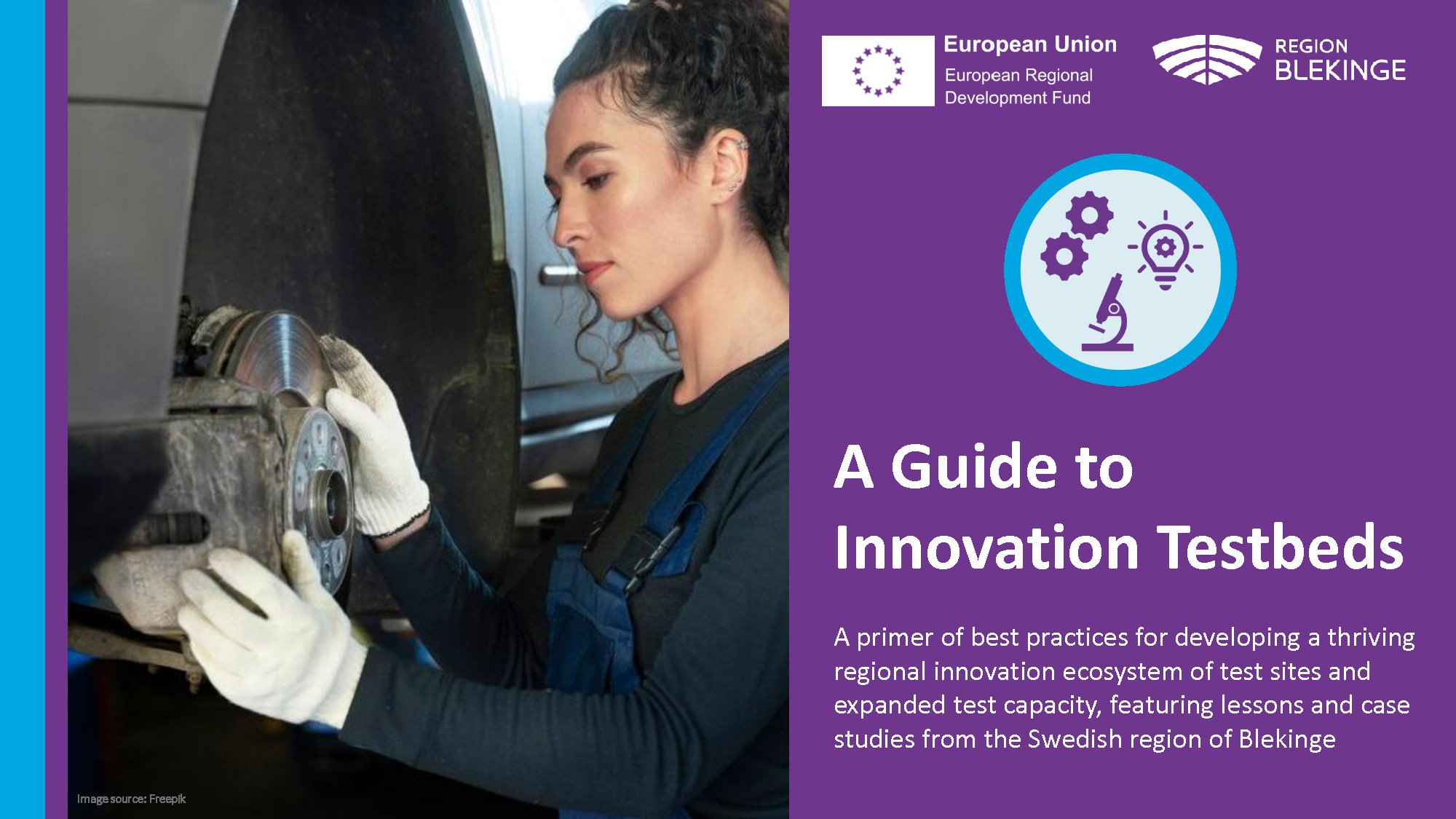
I am working with Region Blekinge in Sweden on their Kickstart 2 project, which is funded by the European Development Growth Fund. This project continues efforts from the first Kickstart project to strengthen the region's research and innovation capacity — including building a thriving system of local test sites and testbeds. Download the project report that I led, which describes various best practices for developing a thriving regional innovation ecosystem of test sites and expanded test capacity. The report features two self-service scorecards to use when either planning a new testbed or assessing the health of an existing testbed.